

Enhance QC speed and reliability
Discover how to perform faster, more reliable batch release and stability testing
Scale organizational throughput by reducing analyst–reviewer iteration cycles
Contextualize assay data with metadata across LIMS, ELN, LES, SoPs
Earlier detection of integration and
audit trail exceptions

The Rise of Sciborgs: Transforming How Science Gets Done
Introducing our new series: Sciborg™ Sessions. See how Sciborgs are fundamentally changing how science gets done.
Tune in live on LinkedIn:
February 27th | 11am ET
Increased productivity
Convert integration best practices and audit trail checklists into digital review assistants.
Compliance confidence
Automated data transfer ensures data integrity and accuracy while eliminating the need for second-scientist review
Improved quality
AI guided, rule-based, non-subjective interpretation for flagging and resolving batch exceptions
Inefficient processes
Manual data transcription, with thousands of entries per study or release, is error-prone and causes bottlenecks
High compliance burden
Manual, sometimes paper-based processes increase the effort for compliance, such as second-person review
Inaccessible data
Data cannot be used for AI/ML or trending across instruments and techniques, preventing data-driven quality practices

Explore resources
Learn how to transform your scientific data into AI-based outcomes.


Unlock the full value of your QC data
Replatform
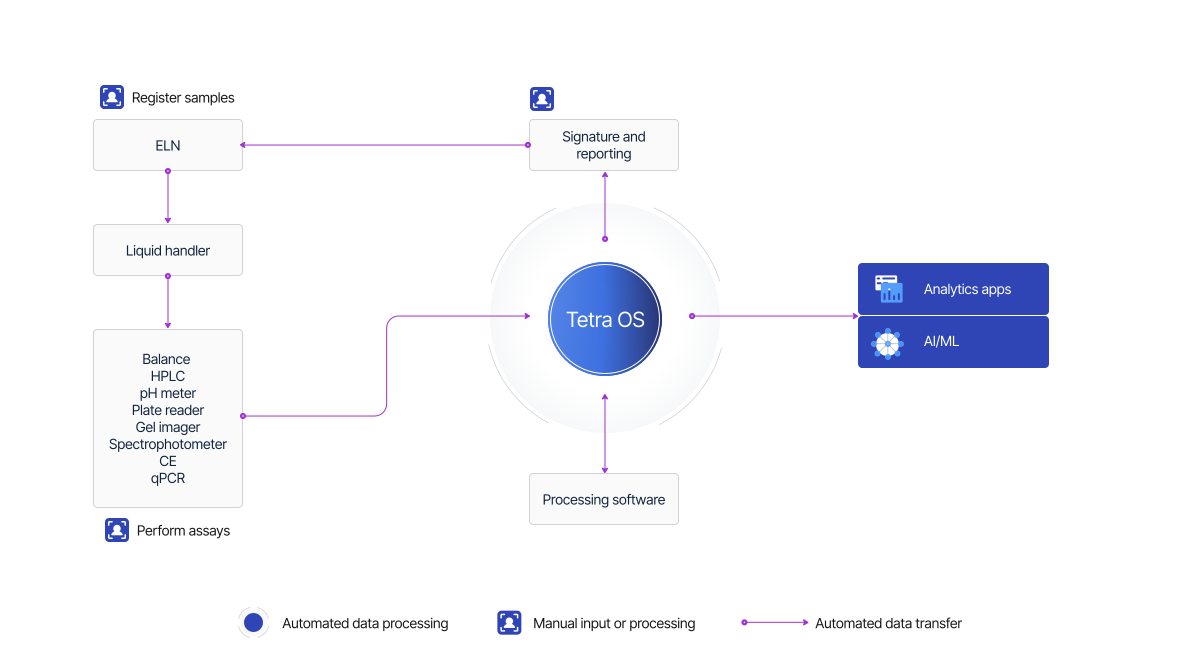
Automatically collect and centralize data from all instruments and systems used in QC
Engineer
Automatically contextualize and harmonize data for visualization and comparison
Analytics
Create dashboards to identify trends and OOT/OOS/OOE events before they occur
AI
Use AI/ML to forecast deviations and troubleshoot anomalies
Quality control workflows for chromatography data analysis
Learn how TetraScience helped a top 15 global biopharma improve chromatography data analysis with automated quality control workflows for:
System suitability tests
Column degradation checks
Shelf life for active pharmaceutical ingredients